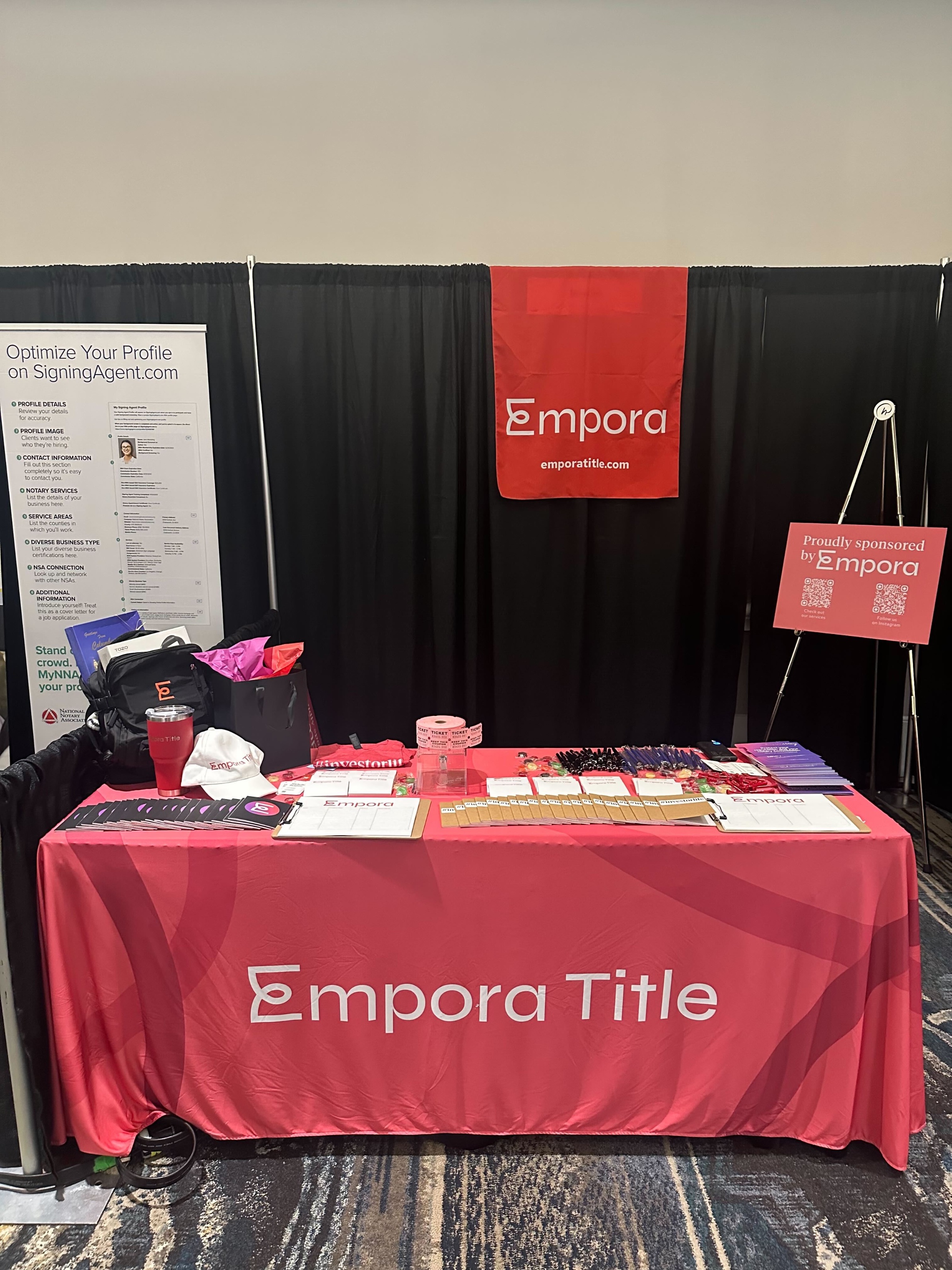
We just got back from NNA. A few of us were at the booth for three days, and a handful of conversations are still on our minds. Some notes from the floor.
If you weren't there: the hall was packed with signing services, identity vendors, ID-scanning gear, regional networks, and the platforms most signing agents already know by name. We were a title company at a notary conference — not the most common combination.
Here's what we kept turning over on the way home.
The work is shifting, and notaries see it first
We heard the same story in five or six separate conversations: title companies are quietly pulling notary work back in-house. Not as a strategic pivot announced in a press release — one assignment at a time, because staffing through the dominant platforms has gotten frustrating enough to be worth the operational lift.
The drivers were consistent. A long tail of newer notaries pooled with twelve-year veterans, with star ratings that flatten the difference. Errors that cause back-and-forth no one is accountable for. The two-hour-window scramble in a small market where the only available notary is whoever responds first.
None of this was news to the people telling it to us — and to be honest, it wasn't news to us either. We run title operations across seven states, and we live the same staffing dynamics every week. One reason we haven't pulled all the way back to a fully in-house panel is that we've built a few things, deliberately, to keep the platform model workable.
A small in-house notary team handles the assignments where the stakes or logistics don't tolerate a miss, and stays close enough to the platform work to back it up when something goes sideways. On the platforms themselves, we work only with notaries who hold both a 5-star rating and Verified status — and we've been steadily building a list of preferred notaries we've come to know by name, so the people picking up our assignments aren't strangers. None of that is the answer to the trend. It's a middle path that has, so far, kept us from needing to choose between scale and the level of care we expect at the table.
Protect your stamp
The biggest thing we left with is a question we owe ourselves. Protect your stamp is a real promise — live commission monitoring, identity scoring, an audit trail that follows a notary across services — and it's also a promise that's harder to land in two sentences at a booth than we want it to be. We're still sharpening how we tell that story. It's a hard problem and we haven't fully solved it, but we aren't afraid of it either; we can see the shape of where it resolves, and three days of conversations made that shape clearer.
We also don't think we're going to figure it out from a desk. The notaries who help us shape what protect your stamp actually means in practice — the founding partners willing to push on the rough edges with us — are part of how this gets answered, not just an audience for the answer. We believe in our ability to build this. We also believe we get there faster, and end up with something better, with the right notary partners alongside us.
To everyone who stopped at the booth: thank you for being honest with us. The work of writing the next chapter of this is yours as much as ours. See you at the next one.